
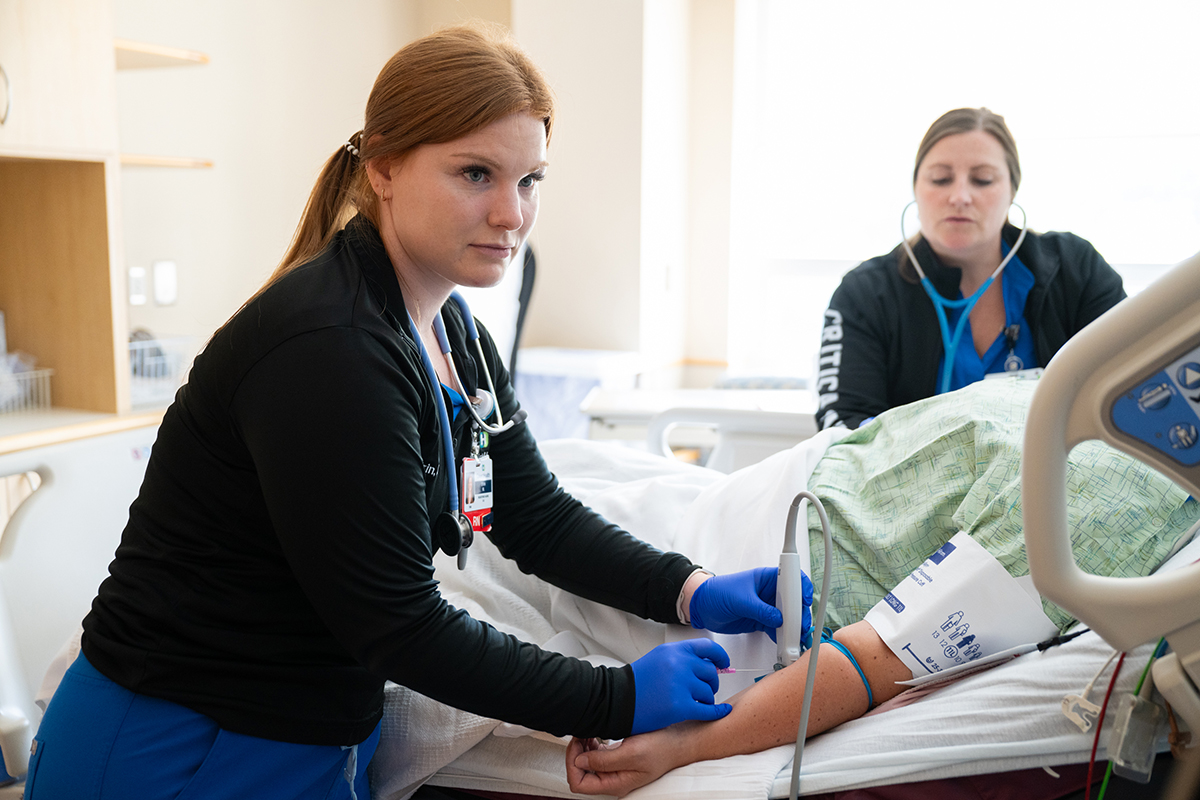
Intensive Care Unit
Critical Care

Critical Care
Prince Frederick, MD 20678
Advanced Critical Care, Close to Home
When a serious illness, injury, or complex medical condition requires continuous monitoring and specialized treatment, the CalvertHealth Intensive Care Unit is here to help.
Our critical care team provides around-the-clock care while keeping patients and their loved ones informed, supported, and involved.
Specialized Care When It Matters Most
The Intensive Care Unit, commonly called the ICU, cares for patients who need a higher level of monitoring and treatment than can be provided on a general inpatient unit.
Our team continuously evaluates each patient’s condition, responds quickly to changes, and adjusts the plan of care as the patient’s needs evolve. Every treatment plan is individualized, with attention to the patient’s medical needs, comfort, safety, preferences, and goals of care.
Critical Care Services
Depending on the patient’s condition, ICU care may include:
- Continuous heart rhythm, oxygen, and blood pressure monitoring
- Advanced respiratory support, including mechanical ventilation
- Intravenous medications that require frequent assessment and careful adjustment
- Advanced cardiac and hemodynamic monitoring
- Treatment of severe infections, sepsis, and shock
- Care for serious respiratory, cardiac, or neurologic conditions
- Close monitoring following surgery or an emergency procedure
- Continuous renal replacement therapy
- Post-stroke and post-thrombolytic monitoring
Some patients may require services available at a larger tertiary medical center. When a transfer is needed, the CalvertHealth team will coordinate the process and communicate with the patient and family.
Your Critical Care Team
Critical care requires close collaboration among many healthcare professionals. Depending on the patient’s needs, the care team may include:
- Critical care physicians and hospitalists
- Advanced practice providers
- Specially trained critical care registered nurses
- Respiratory therapists
- Pharmacists
- Physical, occupational, and speech therapists
- Registered dietitians
- Case managers and social workers
- Palliative care and spiritual care professionals
- Additional medical and surgical specialists
The team works together to evaluate the patient’s progress, coordinate treatment, prevent complications, and prepare for the next stage of recovery.
What to Expect in the ICU
The ICU may look and sound different from other areas of the hospital. Understanding the environment can help patients and families feel more comfortable.
Monitors and Alarms
Patients are connected to monitors that continuously display information such as heart rhythm, heart rate, blood pressure, breathing rate, and oxygen level.
The equipment uses alarms to alert staff when a value changes or when something needs attention. An alarm does not always mean there is an emergency. Your nurse can explain the equipment and answer questions about what you are hearing.
Medical Equipment
A patient may have intravenous lines, oxygen equipment, drainage tubes, feeding tubes, urinary catheters, or other devices needed for treatment and monitoring. The care team regularly evaluates whether each device is still necessary and removes it when it can be safely discontinued.
Daily Care and Rounds
The interdisciplinary team reviews each patient’s condition and treatment plan regularly. Families are encouraged to ask when rounds typically occur and how they may participate when appropriate.
Comfort, Rest, and Recovery
Critical illness can affect sleep, thinking, strength, and mobility. The team works to promote comfort, preserve normal sleep and wake patterns, identify changes in thinking or behavior, and help patients begin safe movement as early as their condition allows.
You Are an Important Part of the Care Team
Family members and support persons provide valuable information, comfort, encouragement, and advocacy.
You can help by:
- Selecting one primary spokesperson to receive and share updates
- Telling the team about the patient’s routines, preferences, and communication needs
- Bringing necessary glasses, hearing aids, dentures, or communication devices
- Speaking calmly and reminding the patient of the day, time, and reason for hospitalization
- Sharing photographs, familiar music, or other comforting items when approved by the care team
- Asking questions when something is unclear
- Participating in care activities when invited and when it is safe to do so
We recognize that having a loved one in the ICU can be overwhelming. Please let the care team know when you need information, additional support, spiritual care, or help understanding the plan of care.
Communication with Families
Clear and consistent communication is an important part of critical care.
To protect patient privacy and ensure accurate communication, families may be asked to designate a single spokesperson. The spokesperson can receive updates from the care team and share them with other family members and friends.
The timing of updates may depend on the patient’s condition, procedures, testing, and physician availability. The bedside nurse can help identify the best time and method for receiving routine updates.
Significant changes in the patient’s condition will be communicated to the designated representative as soon as possible.
Visiting the ICU
Family presence can be an important part of healing and recovery. Visitation may occasionally be delayed or limited during procedures, emergencies, shift activities, or when the patient needs rest.
Because visitor guidance may change, please review CalvertHealth’s current visitation information before arriving.
View Current ICU Visitor Information
All visitors should:
- Check in and wear the required visitor identification badge
- Follow hand hygiene and infection-prevention instructions
- Use personal protective equipment when directed
- Follow the guidance of the patient’s nurse
- Respect the privacy, rest, and safety of all patients
Please speak with the bedside nurse before bringing food, flowers, balloons, or other personal items into the patient’s room.
Transitioning From the ICU
When a patient no longer requires intensive monitoring or treatment, they may be transferred to another inpatient unit to continue recovering.
Leaving the ICU is an encouraging step, but patients and families may still have questions about ongoing treatment, rehabilitation, medications, follow-up care, and recovery after critical illness. The care team will explain the transition plan and help prepare the patient and family for the next stage of care.
Frequently Asked Questions
Why are so many alarms sounding?
ICU equipment uses alarms to notify staff of changes, equipment movement, or values that require evaluation. Not every alarm represents an emergency. Staff monitor the alarms closely and respond based on the patient’s clinical needs.
When will the physician speak with our family?
The bedside nurse can help determine when the primary provider or another member of the medical team will be available. For consistent communication, families are encouraged to select one spokesperson.
Can family members participate in rounds?
Family participation may be available depending on the patient’s condition, preferences, and the activities occurring in the unit. Ask the bedside nurse about the best way to participate.
What personal items should we bring?
Glasses, hearing aids, dentures, communication devices, and a small number of familiar items may be helpful. Please label belongings and check with the nurse before bringing valuables, food, flowers, or larger personal items.
What happens when intensive care is no longer needed?
The patient may be transferred to another inpatient unit where the next phase of treatment and recovery will continue. The ICU and receiving teams will coordinate the transition.